Asking for Help: A Generational Divide?

You know that old stereotype that says men will never stop to ask for directions? I’d like to posit another theory: Young people in the workplace may be less likely to ask for help than their older colleagues.

I was talking the other day with a friend who mentioned that two of her co-workers share what she perceives as a common short-coming: If they have a technology question, they don’t ask for help. They can get completely stalled by a problem and just sit alone at their desks for hours trying to work it out by themselves.

“Why don’t they ask for help?” she wondered. Why not call IT, or contact the software company’s customer support staff? Well, it turns out that both of these colleagues are younger than my friend. Both are, in fact, digital natives.

“Get used to it,” I told her. Continue reading

Online Book Club: 1Q84

I used to be part of a book club. I really enjoyed it, but eventually the members let it die out, largely because of changing priorities and life demands. Sometimes I really miss it, though, usually when I find myself in the embrace of a book that’s so dense I either want to share it or need someone with whom I can bounce around ideas.

My glasses resting on the open book, 1Q84. I snapped this after jotting down some notes as I was reading.

This is one of those times.

I just finished 1Q84, by Haruki Murakami, and I have to say it was one of the most amazing books I’ve read in a long time — dense and multi-faceted and rich with themes and images that seem to simultaneously unfold and wrap together as you read. Continue reading

Writing Tip: What’s that Thing?

Another quick writing tip here. This one, I think, I learned from a high school English teacher:

There’s always a better word than thing.

And I’d say about 95 percent of the time I can think of that word.

Next time you’re writing and find yourself using the word “thing,” stop and take a minute to think if there’s a more specific word you could use. If you can’t think of one, finish your writing and then come back to it. Think again. Give yourself about 5 minutes with it. I’ll bet you can come up with something better.

A Cheap Birthday Excuse to Post Photos

Today is my wedding anniversary, and yesterday was my husband’s birthday. I used to be very organized about personal milestone/celebration dates such as these, but those days seem long gone. Between the demands of work, family and now-too-infrequent attempts to do good in the world, I’m lucky if I even remember birthdays anymore.

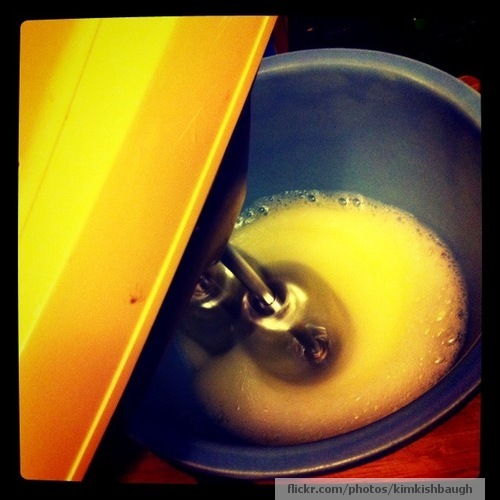
Beating Eggs with 1960s Equipment - Instagram

Many of my cooking tools are old. Both the mixing bowl and the hand beater were my mother's, circa the 1960s. I just love the colors in this pic.

So it was that I got home from work last night and had made no real plans for a birthday celebration. I had asked my husband to think about where he would like to go for dinner, but he’s even worse at planning than I am and had not even managed to choose a preferred cuisine, much less an actual restaurant.

As for a cake? Forget it. I thought about it as I was leaving work, and again as I was driving home, but by the time I got close to home, the thought of a store-bought or bakery-bought cake just seemed too uncaring and impersonal. Continue reading

Create Use Cases for SEO Keyword Selection

One of the most important elements of search engine optimization (SEO) is choosing the right keywords for your content. It’s an art as much as a science, and it’s difficult to teach. I think considering use cases for your target audience can help.

First, an introduction to keywords: Essentially, keywords are terms — words or phrases — that people use to search on the Internet. Whether on Google, Bing or another search engine, they type in a word or phrase to find information they’re looking for.

If you own or manage a website, you generally want them to find your site — if, that is, they’re looking for anything related to what you do. To do this, you can optimize the content on your site to match up with the keywords people are using in their searches.

It’s important not to overdo this — not to load your pages up with too many references to the keywords, for example. (The best rule of thumb to keep in mind at all times is to make your website a good experience for visitors. You do not want your language to feel unnatural to a visitor.) Continue reading

1 Tip to Make You a Better Writer

Aside from getting a really good all-around education and much-improved job prospects, I learned a few really important things in college. For example: Keyboard: flickr.com/photos/kimkishbaugh

  • I learned how to read poetry. (I had a great professor who taught me this, and it’s enriched my whole life.)
  • I learned the basics of ballroom dancing.
  • I learned that storing tomatoes and bananas near each other makes both ripen more quickly. True. Try it. (Or try separating them if they’re already as ripe as you want them.)

But one of the most important things I learned — especially for me, a journalism major — was an important tip to tighten up my writing. Here it is, free of charge, saving you the cost of four years at a Big 10 university: Get rid of the extraneous warmup text at the beginning. Continue reading