And Christmas Day came, because it always does, whether you want it to or not, and it always goes, whether you want it to or not, because life is as it is.
— Jeanette Winterson, The Snowmama, from “Christmas Days”
And Christmas Day came, because it always does, whether you want it to or not, and it always goes, whether you want it to or not, because life is as it is.
— Jeanette Winterson, The Snowmama, from “Christmas Days”
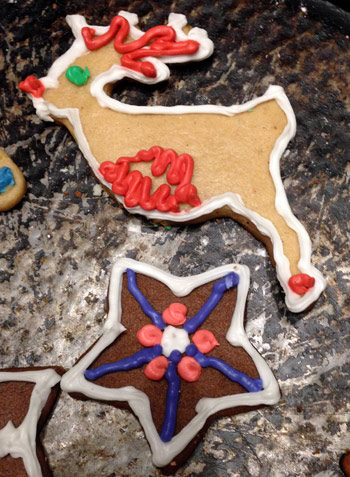 Every year for the past several years, my family and another have come together a few days before Christmas to make and decorate cookies together.
Sometimes a lot gets accomplished. Sometimes not so much. That’s not really the point. The point is that we have created a holiday tradition of fun and fellowship, one that brings us together to laugh and play (and work; making and icing cookies is hard work!), and one that feels closer to the meaning of Christmas than a frenzy of buying and wrapping and unwrapping. Continue reading
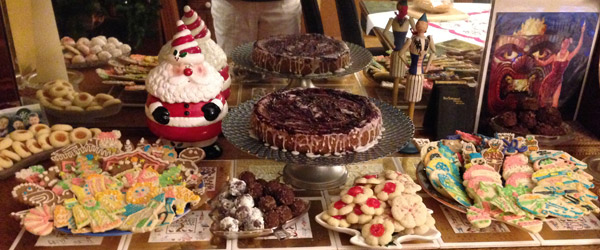 If you know me well, you probably know that holidays are food rituals for me. Thanksgiving is turkey and stuffing and pie; Easter is bunny bread (bunny refers to the shape, not the ingredients); St. Patrick’s Day is corned beef; New Year’s Day is lentil soup. Then there’s the mother of all food rituals: Christmas. Continue reading
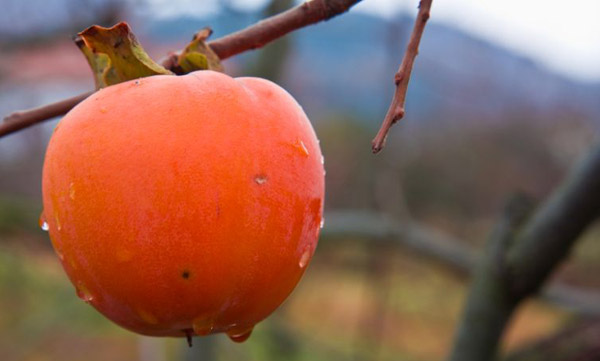
Photo by Boris Oblak (Own work) [GFDL or CC BY-SA 4.0-3.0-2.5-2.0-1.0], via Wikimedia Commons
Not all of one, just a bit. I shared it with my husband. Continue reading
 Do you make New Year’s resolutions? I’ve never really gone in for them, though it’s possible I might have tried once or twice. To me there’s something almost superficial about pegging the promise of a life change on the occasion of a recurring holiday. It seems trivializing or insubstantial, maybe flighty. I don’t trust myself to commit to keep a promise that I’m making because it’s the time of year to make a promise.
But that’s me, and I wonder if other people have success with their resolutions. I do like the idea of “new year, new start.”
I’ve been reading Jeanette Winterson’s “Christmas Days,” a book of stories and essays and recipes that isn’t only about Christmas, and it has this to say about New Year’s resolutions: Continue reading
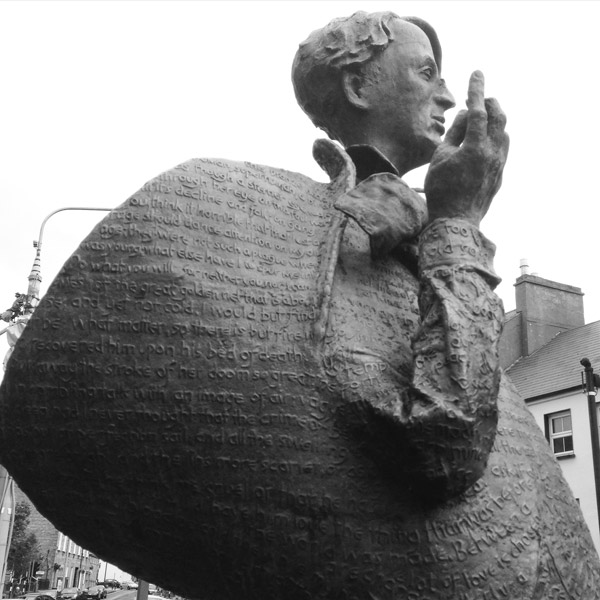 I spent the better portion of last night sitting around a table in a back room of a cafe/bookstore talking poetry with strangers. It was invigorating and enlightening and enjoyable, and a reminder of how important it is to tend my intellectual garden.
Intellectual discovery is an important contributor to emotional wellbeing. When we aren’t discovering new things, learning new things, we can start to feel stagnant, and that can lead to feelings of ennui and unhappiness. But as busy adults—parents, bread-winners, professionals—it’s easy to overlook our own intellectual needs. We might read articles or books related to our work, attend professional conferences, or educate ourselves about the latest best practices in caring for our loved ones, but fail to nurture our real intellectual passions. While we gain valuable knowledge, we don’t engage our emotions in the process—or at least not in the same way as when we just go learn something for the sake of learning it. Continue reading